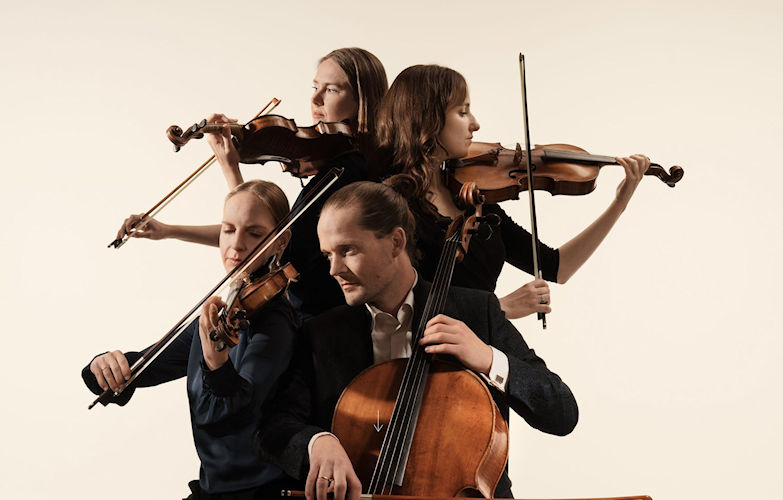
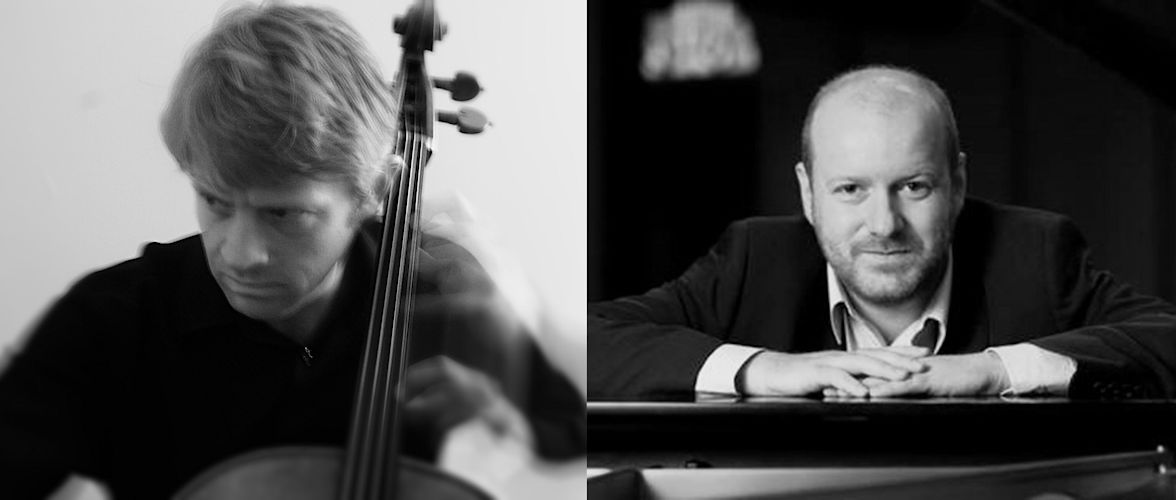
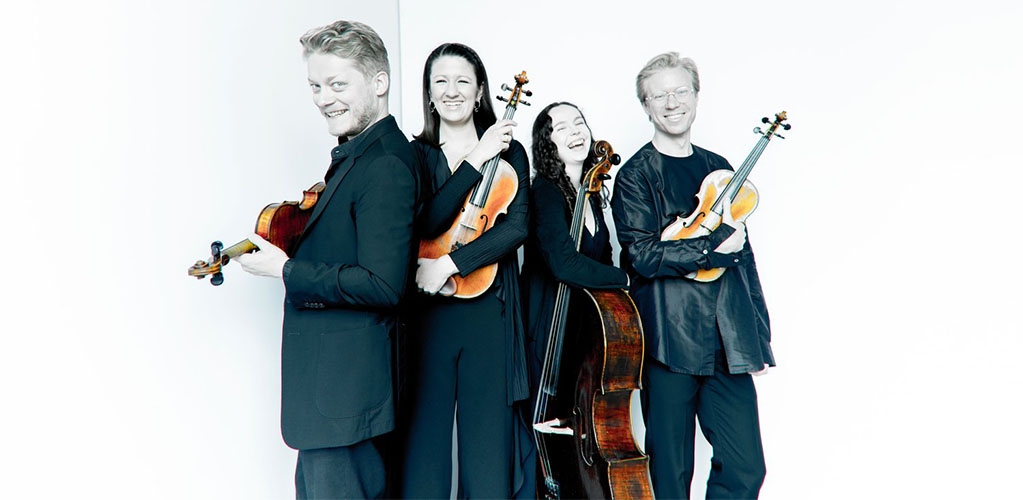


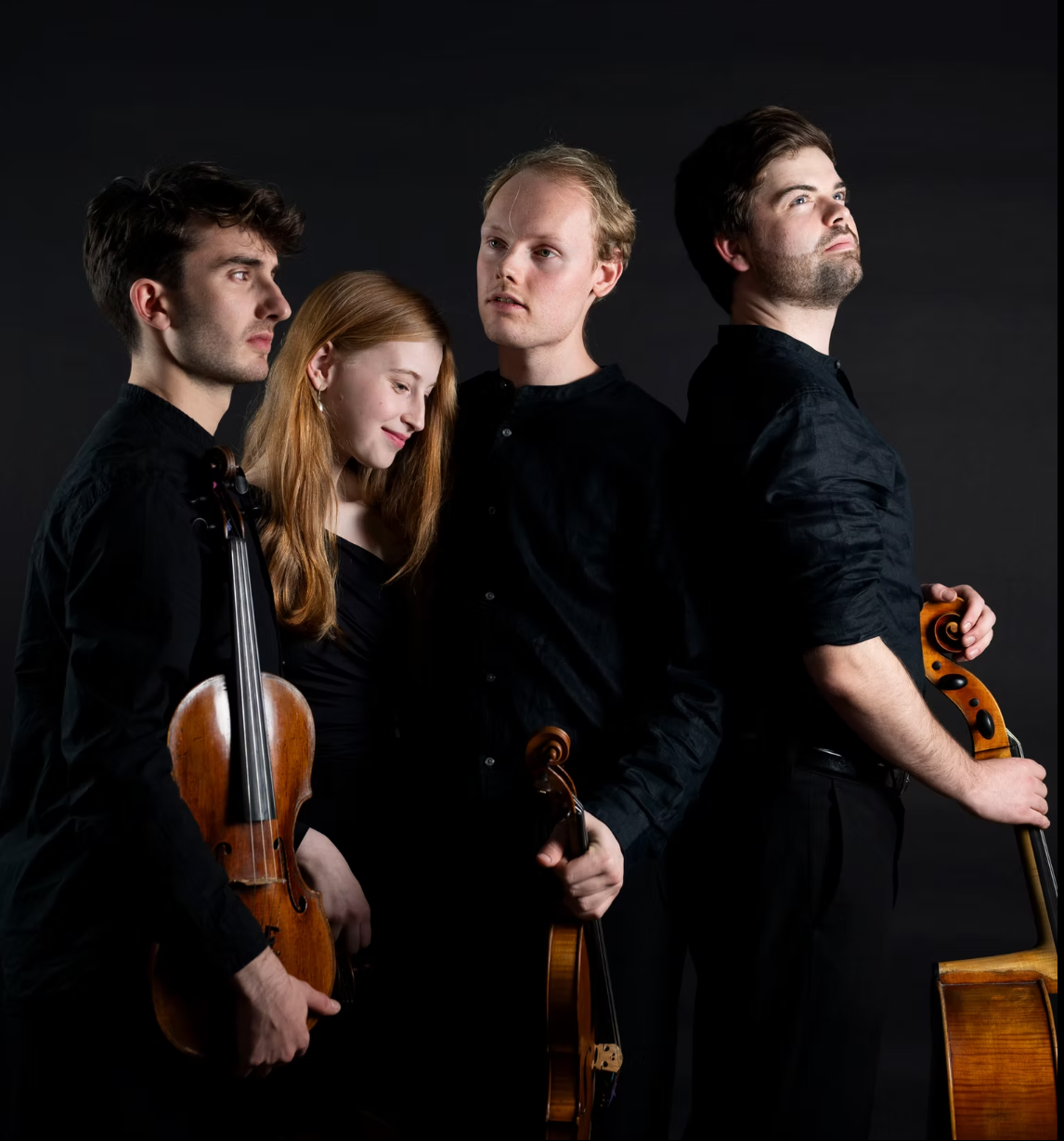


Judith van Driel violin I
Marleen Wester violin II
Marie-Louise de Jong viola
David Faber cello
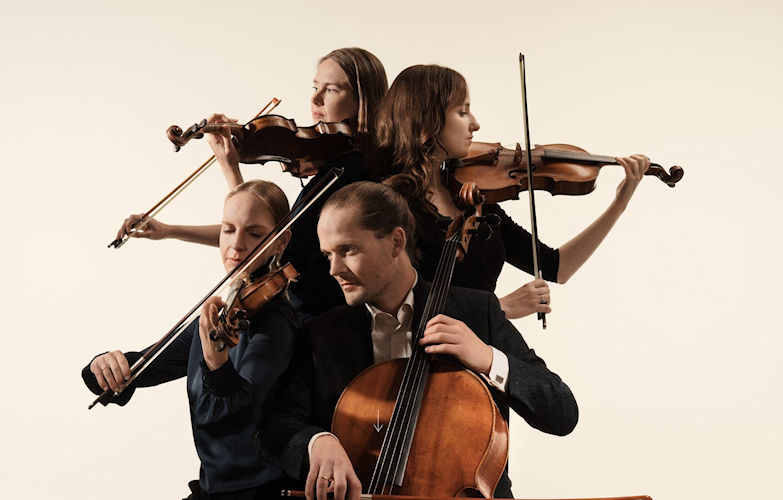
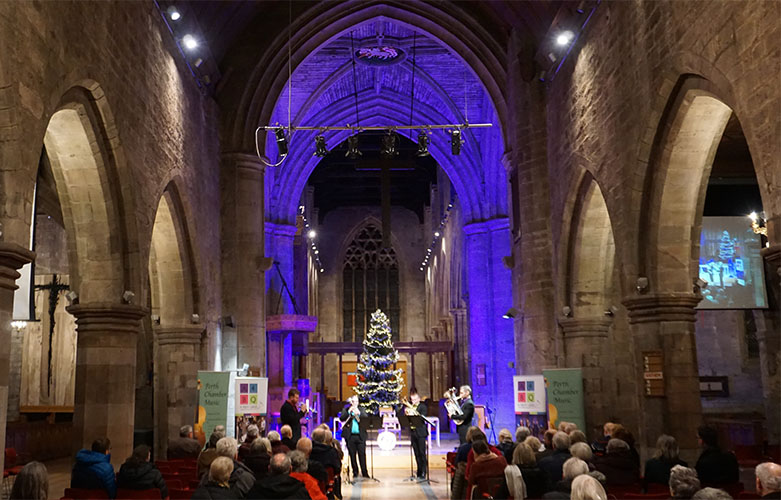
Returning to Perth Chamber Music in St John’s Kirk, Perth and with an exciting new work were the Dudok Quartet of Amsterdam.
After a short, informative show-and-tell about Classical and Romantic bows – with the intention of playing being as close to the composers’ intentions – the Perth audience heard a finely poised reading of Mozart’s Quartet in D Major K575 ‘Prussian No.1’; this nickname as the set of three were dedicated to the cello playing King of Prussia: a Mozartian joke, it does not play at all in the first few bars! Come the development it gave the Dudok’s cellist, David Faber his chance. The sound of the whole quartet in this first movement was stylishly eloquent. This inimitable tone continued in the singing Andante, the cello in its high register. Courtly as ever their Minuet had verve and power; Mozart giving ‘primo uomo’ status to the cello in the slightly slower Trio. In the final Allegretto the cello started the movement and equally outstanding were the duet of the violins and the finesse and grace of all players.
As remarked by many at the interval, the Quartet ‘What Remains’, written for the Dudoks by Joey Roukens, was an exciting and rewarding discovery. ‘Strange Oscillations’ had pulsing waves in dynamic flux leading to a climax of furious power, a pause then a change of direction. ‘Motectum’ was played with long, slow bows: feeling timeless, then moving to anguish, a held viola note, then serenity and warmth came in, all muted and in high register, with quivering the Quartet ended as it had started with a pizzicato ping.
A further fine performance was Shostakovich’s Quartet No.3. After a seemingly light dancing start, doubts soon come. Accelerating as if in fear, there was mocking end. Following relentless viola sawing, the artistry of the Dudoks’ showed in their ppp staccato playing, finally a haunting end. A violent start of blatant militaristic bent, forceful becoming hysterical, characterised the third movement. Lament and anguish of the fourth movement peter out. Almost a cello cadenza moves into the fifth, a dancing passage, but hysteria and anguish return, then lament as the violin climbs ever higher and the quartet literally dies out – morendo.
But with echoing applause the Dudok Quartet returned to play, heartfelt in sad polyphony, a Josquin des Prés (Desprez) transcription of Mille Regrets.
Ian Stuart Hunter