




Reviews of our concerts, written by Ian Stuart-Hunter, are published here and in the Perthshire Advertiser.
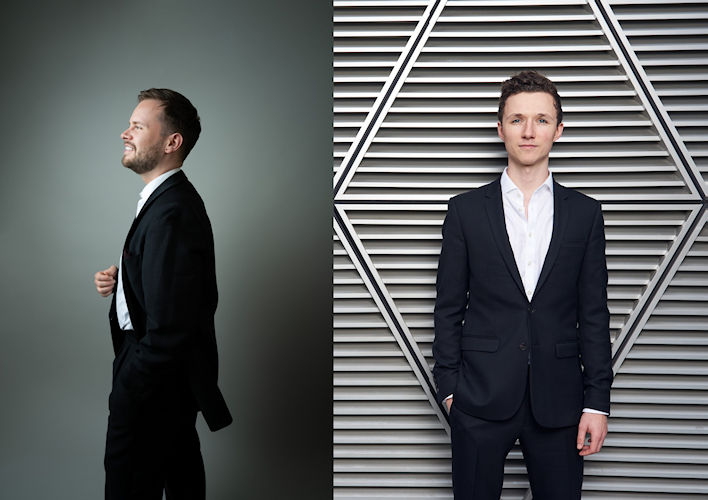
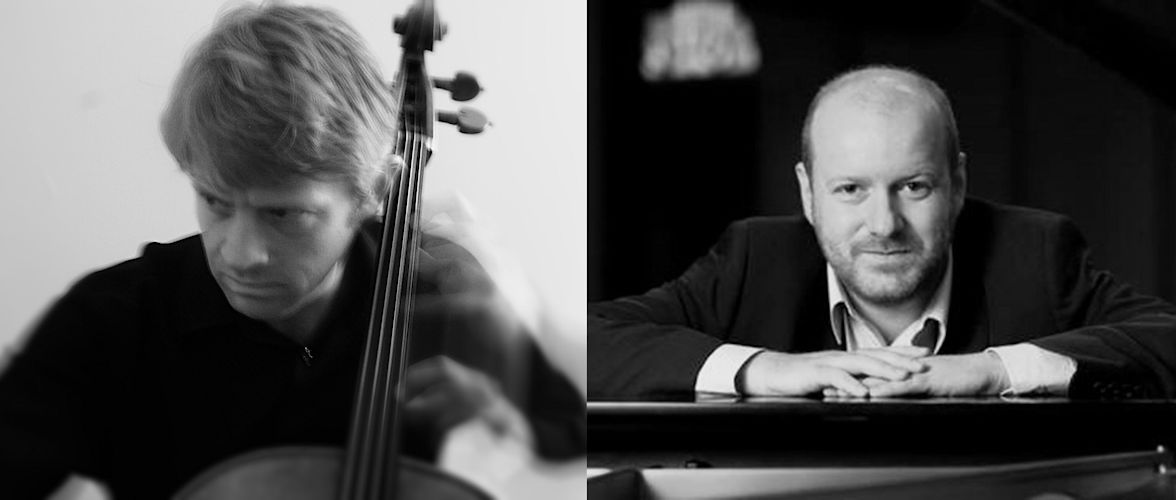
Katherine Spencer clarinet
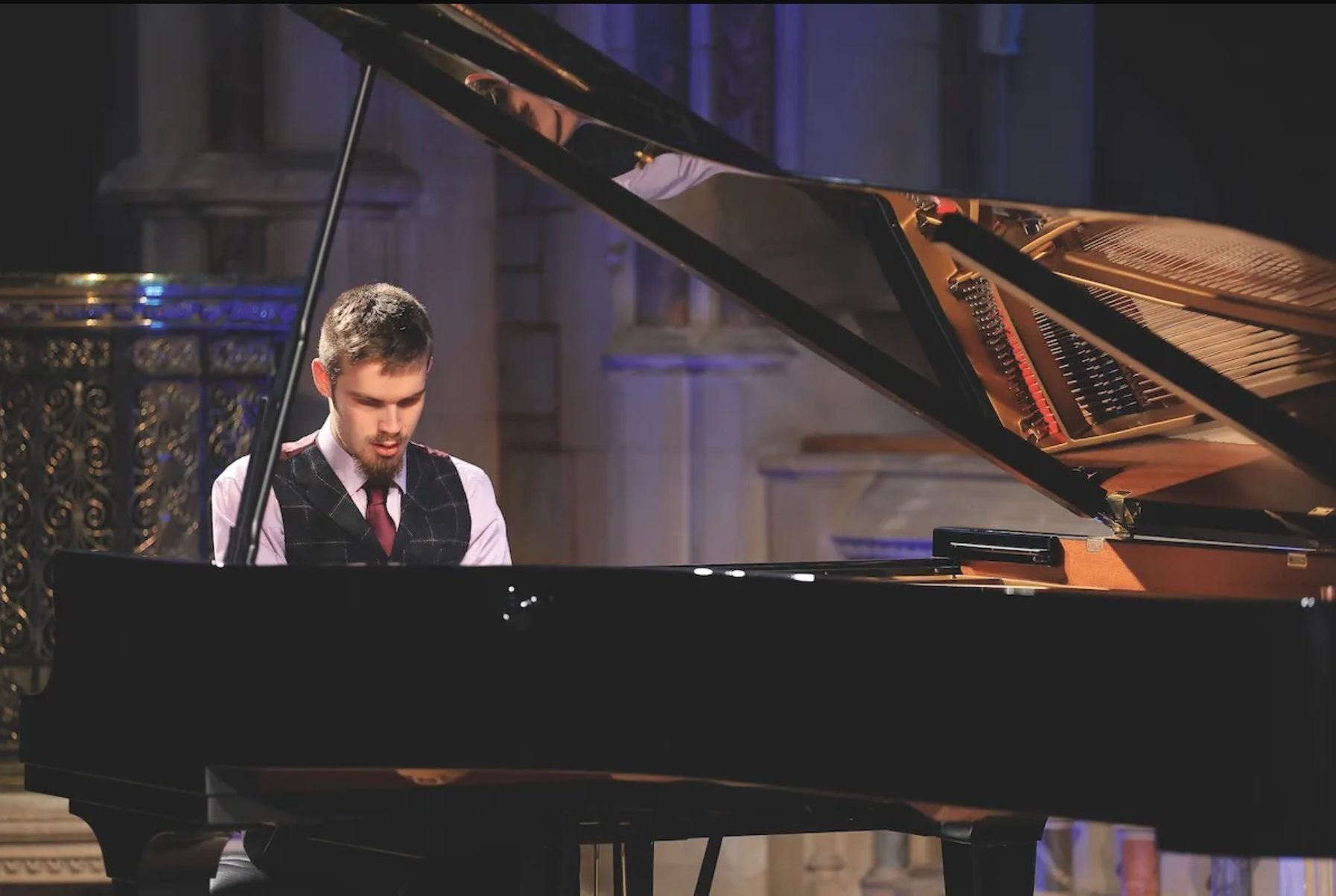
Sam Haywood piano
Friday 12th December 2025
St John’s Kirk, Perth
With works spanning nearly 200 years, Katherine Spencer, clarinet, and Sam Haywood, piano, enthused their audience in St John’s Kirk, Perth in their Perth Chamber Music concert. Fantasie is also the German for ‘imagination’ and the playing of Schumann’s Fantasy Pieces Op.73 had both the lightest and the deepest touch. The first was, indeed, ‘sweet and with expression’. The second brought out the fairytale and humour. The third was more outgoing, towards heroic, with a Romantic, pensive centre.

Katherine Spencer’s aim was ‘Youth, nostalgia and humanity’ in Brahms’Clarinet Sonata No.2: its first movement was an openhearted song of mountains and lakes – Brahms’ 0n holiday. Sam Haywood was magnificent in the at times craggy piano part. Both managed smooth legato playing sensitively. The second was tempestuous at first, a rolling centre and a fine gentle transformed end. With the Variations final movement were were back almost yodelling with the theme: first, breaking it up, then perkier, with enjoyment, next almost cheeky, then with starry piano, sustained. Finally, with a brilliant piano start, nostalgic retrospection and a joyful end.
Sam Haywood began the second half with Geraldine Thomson Mucha’s short Tempo di Mazurka, with firm mazurka rhythm, there were rhythmic Scotch snaps and the hint of a Scottish folksong. Magically sounding from offstage, MacMillan’s clarinet solo From Galloway made its effect… Strongly thrust aside by the chords opening a dramatic, forceful Chopin: Scherzo No.1, Op.20. Equally finely done was its lullaby, Polish Christmas Song ‘Sleep, little Jesus’.
Poulenc’s Clarinet Sonata ended the printed programme. Headed ‘tristamente’ (sadly) it started with japes before a calm, sustained, beautiful Poulenc tune. Katherine played the start of the Romanza into the piano, later the gentle liquid line rising to almost keening, returned to pensively sad, before the final cry. Poulenc the street urchin began the Allegro con fuoco (with fire!, indeed), again with a Poulenc tune, and ending in irrepressible high spirits.
“We think you’ve clapped enough for three encores,” said Katherine: first Acker Bilk’s Stranger on the Shore; Chopin’s ‘Minute’ Waltz, with perfect poise and dynamics – fast but not giddy. Finally a much appreciated, exciting arrangement from the pair of Gershwin’s Prelude No.3.
Ian Stuart Hunter
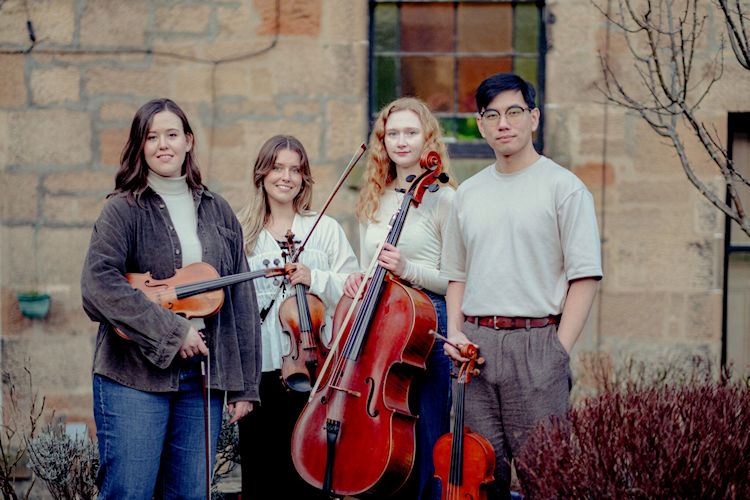
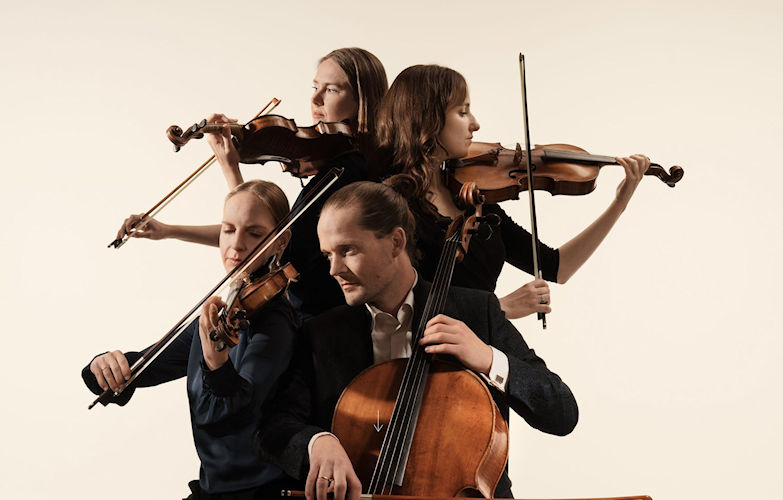
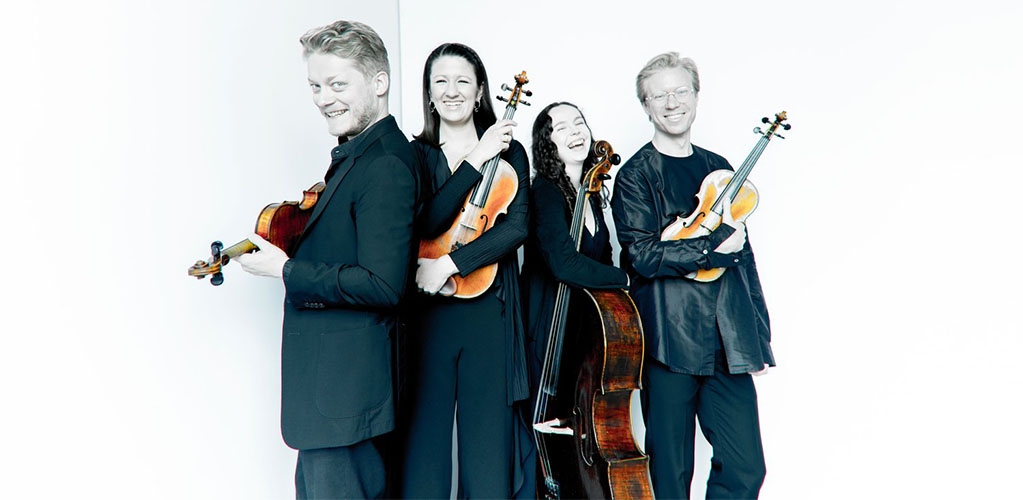
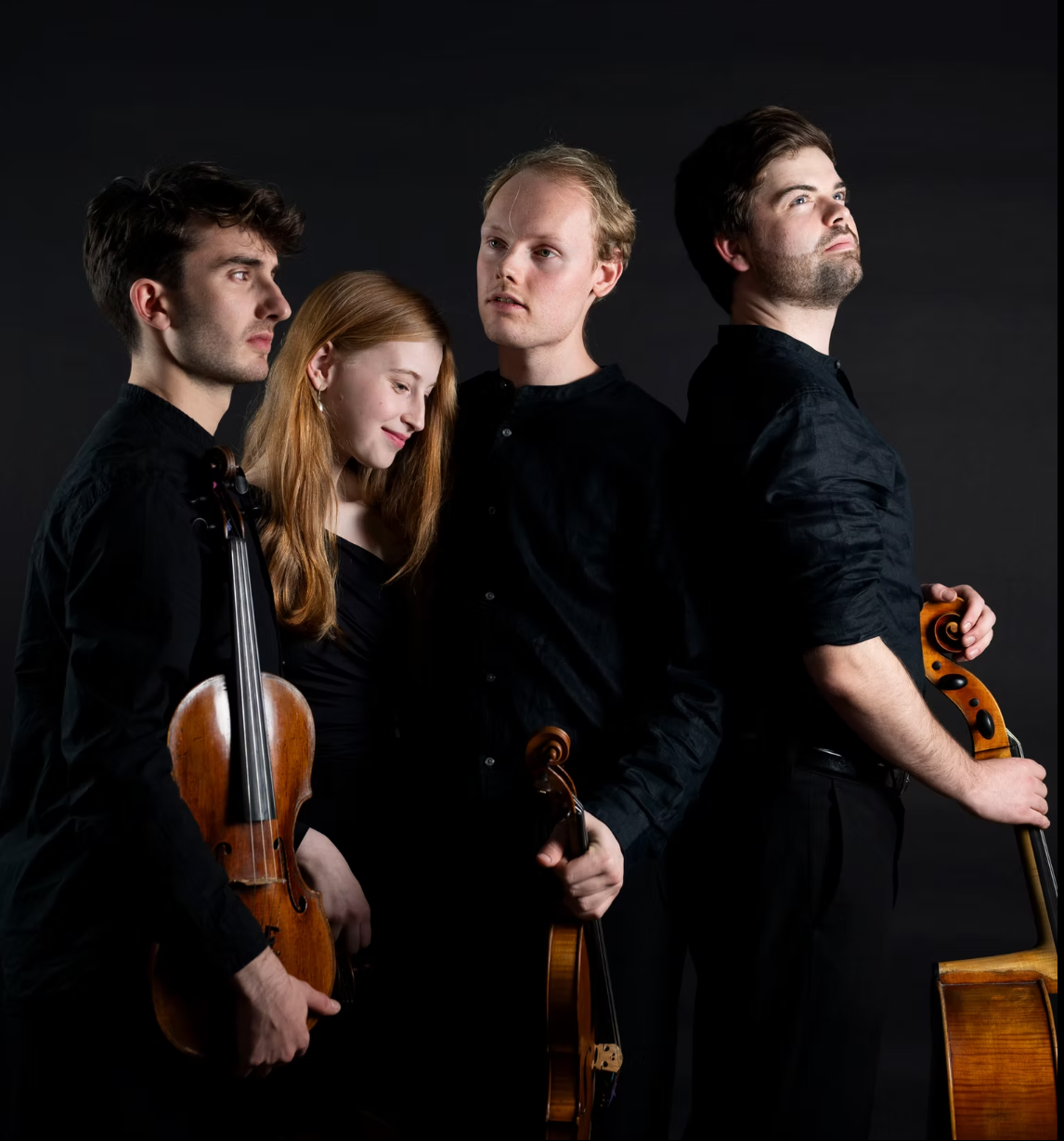
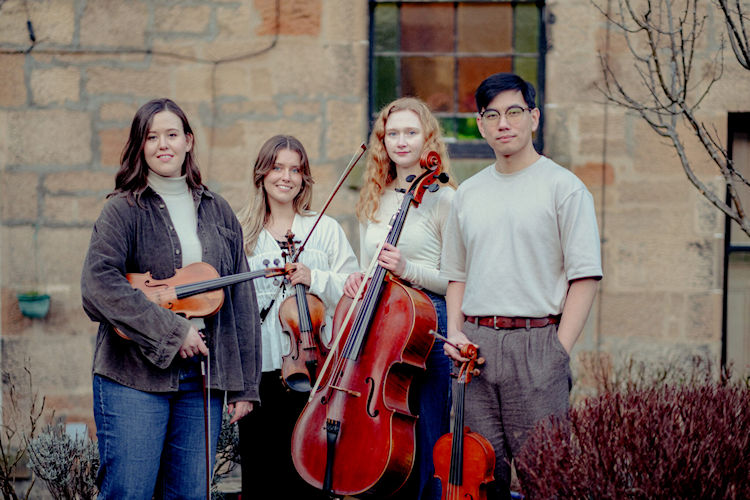
Resol String Quartet
Sunday 16th November 2025
St John’s Kirk, Perth
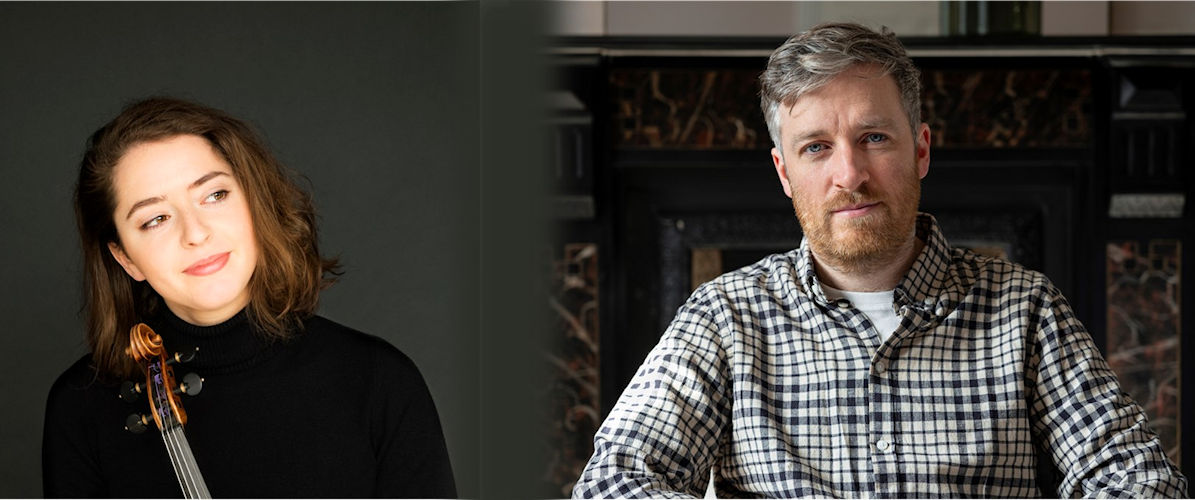
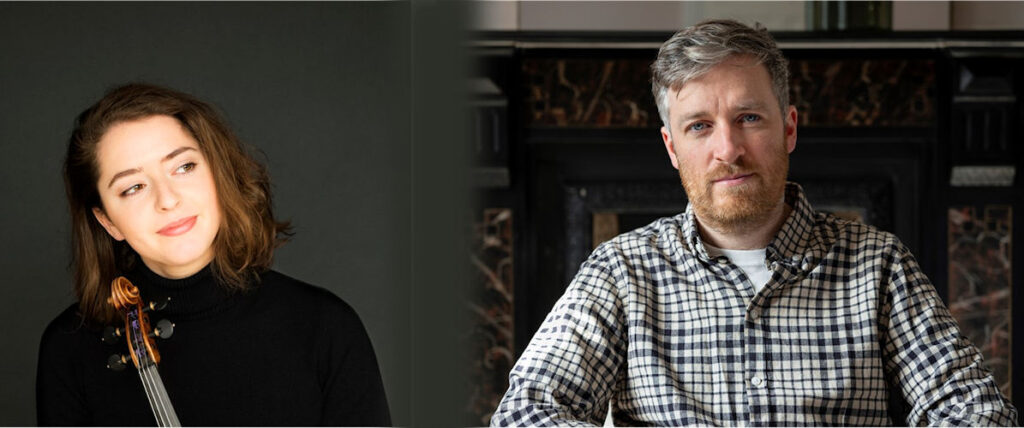
Mathilde Milwidsky violin
Richard Uttley piano
Tuesday 14th October 2025
St John’s Kirk, Perth
Perth Chamber Music’s 2025-2026 season in St.John’s Kirk got off to the most fabulous start with violinist Mathilde Milwidsky and pianist Richard Uttley – both stylishly absolute masters in their programme which ranged over 300 years.
Mozart was obviously having fun in his Violin Sonta in A Major K305 and this was brought out, with a touch of drama at the development then the gentle and refined Theme and Variations.
Nicos Skalkottas’ Violin Sonatina No.2 had a first movement inspired by Greek folk-tunes. Its Andante, with muted violin, had intense double-stopping and a musing piano. Allegro vivace was the lively moto perpetuo Finale with episodes.
A real find was Grazyna Bacewicz’s Stained Glass Window: a fascinating approach to sound, it had a muted, sustained legato start with occasional shafts of glinting from the piano. Short, it impressed by its colour and refined lyricism.
In Ravel’s Violin Sonata in G, after an innocent piano start, Mathilde Milwidsky came in with super tone. Her bowing technique spanned both fluent and highly articulated. In the Blues her pizzicati were fearless, sounding excellent in the St John’s acoustic. Richard Uttley’s piano was alive to Ravel’s humour and sarcasm. The Perpetuum mobile was all its title promised in the way of breathakingly brilliant playing.
Heinrich Biber’s tour de force Passacaglia for solo violin began the second half. His incredible inventiveness based upon just four notes was served by sovereign technique in fingers and bowing.
Richard Uttley rejoined for the violent start to Lutoslawski’s Subito contasting hectic and calm in a roller-coaster of fireworks.
Magnificent was the musicality of Brahms’ Third Violin Sonata. Warmth and drama fitted both like a glove, satisfyingly truthful in melody and shape. The Adagio had lyrical warmth, peerless double-stopping, a musing centre, then an intensified return. The third movement was intriguing, appearing almost light, then shockingly powerful, and off impetuously into the swashbuckling Hungarian-inspired Finale: Mathilde Milwidsky fiery, Richard Uttley in Brahms’ powerful piano writing.
Adding to their excellence and variety, the most vivid and varied performance of Bartok’s Rumanian Folk Dances was the substantial encore.
Ian Stuart Hunter